
SNU Engineering Entrepreneurship with Silicon Valley Program
posted: 08-Jul-2026 & updated: 20-Jul-2026
Program
Mentors
Sunghee Yun / Eunkwang Joo / Minha Hwang / Yerang Huh / Chanik Park / Gordon Park
Mentor Responsibilities
- Guide assigned teams through the team-project track: Problem Definition → Solution Design → Validation → Final Pitch.
- Attend two in-person sessions: Sat Jul 11, 1:30–3:30 pm (guidance) and Fri Jul 17, 8:00–10:00 pm (Final Pitch prep).
- Maintain light asynchronous communication with assigned teams between the two sessions.
Load Summary
| Mentor | Teams | Team IDs |
|---|---|---|
| Sunghee Yun | 2 | MP6, GT1 |
| Minha Hwang | 2 | MP1, MT2 |
| Gordon Park | 2 | MP3, MP5 |
| Chanik Park | 2 | MP2, GT2 |
| Eunkwang Joo | 3 | MT3, MT4, MT5 |
| Yerang Huh | 2 | MT1, MP4 |
Mentor Assignments
Assignments pair each team’s core technology with the mentor whose expertise most accelerates it. Team IDs follow the Student Team Composition sheet (MP = individual founder, MT / GT = team).
| Confirmed mentors | 6 (incl. Sunghee Yun as head mentor) |
| Student teams | 13 (6 individual, 7 team) |
| Load | 2 teams per mentor (only Eunkwang Joo carries 3) |
| Touchpoint 1 | Sat 11-Jul-2026, 1:30–3:30 pm — team-project guidance |
| Touchpoint 2 | Fri 17-Jul-2026, 8:00–10:00 pm — Final Pitch preparation |
| Between sessions | Light async communication with assigned teams |
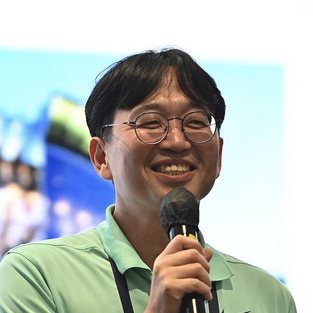
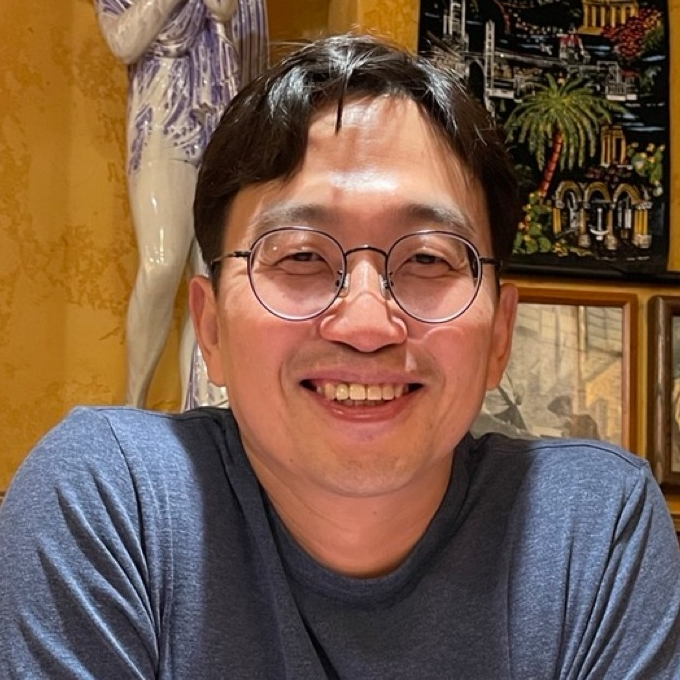
Sunghee Yun · 2 teams
Head Mentor (floats across all teams) — Co-Founder & CTO, Erudio Bio · Chair, Silicon Valley AI Nexus
Focus: Convex Optimization, AI/LLM & GenAI strategy, biotech, molecular dynamic (MD) simulation, personalization/recommendation (@ Amazon), entrepreneurship
| Team | Members | Startup Idea | Why this mentor |
|---|---|---|---|
| MP6 | 최은우 (컴퓨터공학부) | Re:View — Slide–transcript alignment multimodal learning platform | Multimodal LLM application; benefits from foundation-model + product framing |
| GT1 | 박서연 (국악과) · Wang Melody (경영학과) | Casper — AI case-interview simulation & career platform | LLM reasoning + edtech; strategic mentoring on defensibility and market |
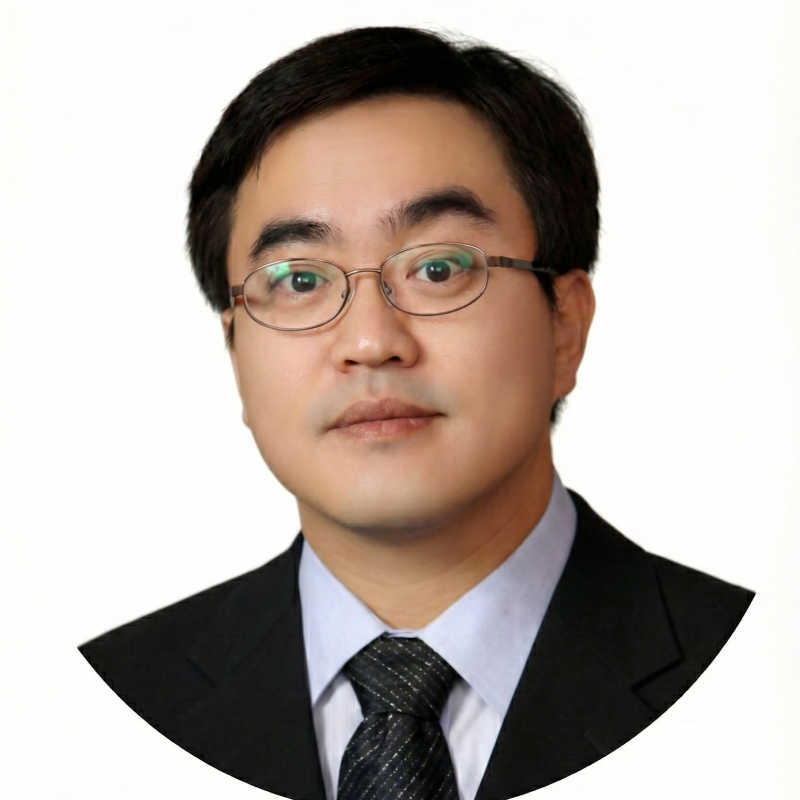
Minha Hwang · 2 teams
Principal Applied Scientist, Microsoft AI · Angel Investor
Focus: LLM / agentic AI / AI search / evaluation, plus recommendation, pricing & assortment (marketing-science PhD)
| Team | Members | Startup Idea | Why this mentor |
|---|---|---|---|
| MP1 | 김대현 (재료공학부) | Jungbi Banjang (정비반장) — Ontology & LLM urban-redevelopment automation B2B SaaS | Enterprise LLM + knowledge/ontology system — core Microsoft AI territory |
| MT2 | 우승연 (기계공학부) · 최재웅 (기계공학부) | PICKIT — NL multi-channel e-commerce OMS (orders, inventory, demand forecast) | Assortment / e-commerce / demand forecasting — his marketing-science bullseye |
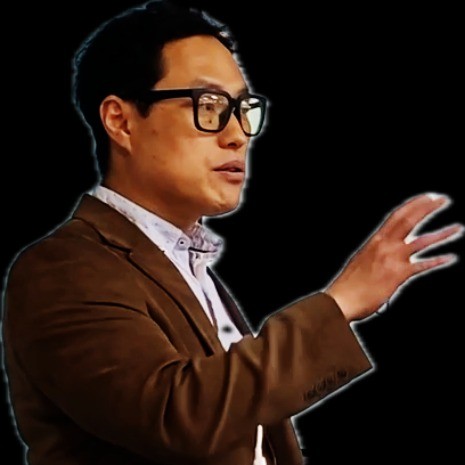
Gordon Park · 2 teams
Neuroscientist & CEO, PathoBrainSeq · BioAI
Focus: Neuroscience, bio/medical AI, biological image & material analysis
| Team | Members | Startup Idea | Why this mentor |
|---|---|---|---|
| MP3 | 박도현 (기계공학부) | Micro AI Analyzer — DL classification of microglial (HMC3) inflammation states | Microglial neuroinflammation is dead-center of his neuroscience expertise |
| MP5 | 허도원 (전기정보공학부) | Seaweed Processing & Distribution — CV + domain AI for material processing & distribution | Vision-based biological-material analysis parallels his bio-image classification work |
Chanik Park · 2 teams
Chief Commercial Officer, MangoBoost · ex-Samsung Semiconductor EVP
Focus: Systems, semiconductor/manufacturing, edge/AI infrastructure, and commercial / go-to-market (CCO)
| Team | Members | Startup Idea | Why this mentor |
|---|---|---|---|
| MP2 | 민승희 (항공우주공학과) | CMYWB 5-Channel 3D Printer — AI-CFD static-mixing nozzle for full-color FDM | Manufacturing + systems/process optimization — his hardware-systems core |
| GT2 | 김준휘 (기계공학부) · 오지승 (자유전공학부) | Kandid Spot — Korea travel local-recommendation app | Consumer marketplace; benefits from go-to-market / commercialization coaching (CCO lens) |
Eunkwang Joo · 3 teams
CEO, WASD3R · AI-Native Builder, SFvibe · ex-Nextdoor · Mentor, SW Maestro & Berkeley SkyDeck
Focus: AI-native full-stack building, consumer & mobile products, rapid MVP/prototyping, 0-to-1 founder mentoring
| Team | Members | Startup Idea | Why this mentor |
|---|---|---|---|
| MT3 | 강채은 (기계공학부) · 김산 (전기정보공학부) · 안성준 (건축학과) | New venture — item TBD (Mech / EE / Arch) | Serial-founder builder to guide ideation to MVP for a team still choosing its idea |
| MT4 | 양승민 (기계공학부) · 허준영 (기계공학부) · 최인식 (기계공학부) | New venture — item TBD (Mech x3) | Same 0-to-1 need; hands-on shipping experience to move fast from concept to demo |
| MT5 | 권성안 (산업공학과) · 서준빈 (건설환경공학부) · 안준영 (기계공학부) | New venture — item TBD (Ind Eng / Civil / Mech) | Ideation-to-prototype coaching, drawing on his SW Maestro / SkyDeck mentoring |
Yerang Huh · 2 teams
Sr. Director, View, Inc. · Co-Founder, NextEPC
Focus: IoT, embedded software, 4G/5G connectivity, smart-building systems; founder-journey coaching
| Team | Members | Startup Idea | Why this mentor |
|---|---|---|---|
| MT1 | 윤대원 (건축학과) · 채민규 (화학생물공학부) | Lymo AI — AIoT autonomous solar / blind control for glass façades | Smart-building AIoT control is literally his day job at View Connect |
| MP4 | 이석준 (항공우주공학과) | Hybrid Rover — EDF jet-vane propulsion + 4WD for public-safety operations | Embedded systems / real-time control fit his engineering depth |
Project Guidance — Building Your Pitch
Resources and advice contributed by the mentors to help each team turn its idea into an investor-ready pitch. Work through these alongside the team-project steps in the Schedule below.
Start with the IR Pitching Preparation Guide — deck structure, expected questions, and how you will be evaluated.
1. Define the Problem — the 7 Steps of Problem Solving
Contributed by Minha Hwang
The structured problem-solving method Minha learned as a McKinsey consultant. Following each step carries you from problem definition through to an execution plan and real results — a direct extension of the Step 1 (Problem Definition) session.
- Cracking Business Case Interviews, Part 1 — Define a Problem
- Cracking Business Case Interviews, Part 2
2. Build the Deck — Y Combinator–Style Template
Contributed by Gordon Park
Simple and Clean Investor Deck Presentation
A pitch deck template organized to the Y Combinator deck standard, covering the canonical Silicon Valley IR structure:
Executive Summary → Product → Business Model → Target Market → Competitive Advantage → Team → Financials → The Ask
How to use it. Treat filling in this deck as the work of organizing your business item — do the market research as you go, rather than writing slides at the end. The point is not to produce a presentation; it is that by working through it, the idea begins to take the shape of a company.
Follow the structure, but customize freely to fit your team’s item. It is a scaffold, not a script.
3. Review & Critique the Deck — Multi-Agent Skills
Contributed by Minha Hwang
Two multi-agent workflows that review and critique a pitch, built to run on Claude Code (or any coding-agent CLI with multi-agent support). Each comes with an installation and usage guide, including the prompts to use.
| Skill | Use when |
|---|---|
| Multi-Agent Pitch Deck Review | Your only input is the pitch deck |
| Multi-Agent Due Diligence | You also have email, financial projections, cap table, offering documents, or DD reports — a 3-phase / 6-agent architecture |
Why this matters. These were built as an investor’s tool — Minha’s own custom workflow for angel investing. Founders can therefore run them 역지사지: turn the investor’s critique on yourself, and harden your deck, cap table, and financial projections before anyone else sees them.
4. Beyond Prompt Engineering
Contributed by Minha Hwang
Seminar material covering (1) Intro to LLM and Agentic AI, (2) AI and Learning, (3) Vibe Coding → Agentic Engineering, and (4) Agentic Research. Portions of this preview his Jul 15 lecture and demo (see Day 6).
5. Going Further — Agentic AI Summit 2026
Suggested by Minha Hwang for teams building on agentic AI
Agentic AI Summit 2026 — Aug 1–2, 2026, UC Berkeley (hosted by Berkeley RDI). Online streaming is available via a free Virtual Pass, so you can attend from Korea after the program ends.
Schedule
Day-by-day program with session details. Slides, materials, and notes are posted here as the program progresses.
Venue note: All sessions originally scheduled at the KOTRA Silicon Valley building (KIC SV) are held at the Ranch instead. The program content, schedule, and instructors are unchanged.
Day 1 · Fri 10-Jul-2026 — Arrival & Moloco
Travel: Air Premia 111, Incheon 19:15 → San Francisco 13:00 (11 h) · date line crossed
| 2:15 pm | Arrival at SFO — immigration & customs |
| 3:15 pm | Meet guide |
| Evening | Dinner, then transfer to the Ranch & check-in |
Day 2 · Sat 11-Jul-2026 — Kickoff & Team Project Step 1
| 8am | Breakfast at the Ranch |
| 9am–12pm | [Lecture 1 & 2] Program Kickoff & Orientation |
| 12pm–1pm | Lunch |
| 1:30pm–3:30pm | Team Project — Step 1: Problem Definition (mentors present) |
| 4pm-5pm | [Lecture] Sehyuk Park, Co-CEO, Moloco |
| 5pm–9pm | Welcome Dinner / Happy Hour |
[Lecture 1 & 2] Program Kickoff & Orientation
Speaker: Sunghee Yun / Time: 9am–12pm / Venue: Ranch
- Lecture 1 — Learning from Silicon Valley: Technology, Entrepreneurship, and a Global Mindset – Presentation Slides
- Lecture 2 — The AI Inflection Point: Where AI Technology, Economic Transformation, and Human Questions Collide in the Age of Agentic Intelligence – Presentation Slides
Team Project — Step 1: Problem Definition
Lead: Sunghee Yun · All mentors present / Time: 1:30pm–3:30pm / Venue: Ranch
- Derive problems from company visits and lectures
- Define the “Real Problem” — sharpen the pain point
- Each team is paired with its assigned mentor (see Mentor Assignments above)
Welcome Dinner (Happy Hour)
Time: 5:30pm–10pm / Venue: Ranch
Joined by experts and alumni from Silicon Valley AI Nexus.
Day 3 · Sun 12-Jul-2026 — Startup Fundamentals
| 9am–12pm | [Lecture 3 & 4] The Nine Vital Signs of Startup Success |
| 2pm–5pm | [Mentoring 1 & 2] Startup Fundamentals |
[Lecture 3 & 4] The Nine Vital Signs of Startup Success
Speaker: Jeff Wallace Time: 9:00 am–12:00 pm · Venue: Ranch
Silicon Valley’s “elephant in the room” is venture capital’s 90%+ portfolio failure rate — driven largely by team and product–market fit. This interactive workshop reviews the Nine Vital Signs used to evaluate startups, surfaces the perception gap between founders’ views and reality via a live market-readiness survey, and closes with a customer-discovery toolset.
[Mentoring 1 & 2] Startup Fundamentals
Speaker: Douglas Park Time: 2:00–5:00 pm · Venue: Ranch
- Why some startups succeed and most fail
- Execution and evidence-based entrepreneurship
- Founders and teams: the people behind the technology
- Solving a real problem: customer discovery, MVPs, and product–market fit
- Competing in the AI economy
- Case studies of startup success and failure
Day 4 · Mon 13-Jul-2026 — Sendbird & Advisory Boards
| 9am–10am | Visit Google @ Mountain View |
| 11am–12:30pm | [Company Visit 2] Sendbird Inc |
| 2pm–5pm | [Mentoring 3 & 4] Building an All-Star Advisory Board |
| 6pm–8pm | Dinner, then team project work |
| 8pm–10pm | Team Project — Step 2: Solution Design |
[Company Visit 2] Sendbird Inc
Host: John S. Kim (김동신), Co-Founder & CEO Time: 11:00 am–12:30 pm · Venue: Sendbird
A leading Korean-founded unicorn — company introduction and Q&A.
[Mentoring 3 & 4] Building an All-Star Advisory Board
Speaker: Jeff Wallace Time: 2:00–5:00 pm · Venue: Ranch
How early-stage founders build and leverage a high-impact advisory board to accelerate growth and improve investor readiness: how an advisory board differs from a board of directors, choosing the right industry leaders, onboarding and compensating advisors, and integrating them effectively. Real-world examples from Dyson, The North Face, and U.S. Customs, closing with advisory-board KPIs and a nine-part Investor Readiness Assessment.
Team Project — Step 2: Solution Design
Lead: Sunghee Yun Time: 8:00–10:00 pm · Venue: Ranch
- Architecting the AI solution
- Model architecture · Data strategy · System pipeline
- Competitive service analysis (benchmarking)
Day 5 · Tue 14-Jul-2026 — Grumatic & Validation
| 9:00 am–12:00 pm | [Company Visit 3] Grumatic Inc |
| Afternoon | Independent research |
| 8:00–10:00 pm | Team Project — Step 3: Validation |
[Company Visit 3] Grumatic Inc
Host: Eric Kim Time: 9:00 am–12:00 pm · Venue: Ranch
Building and scaling an AI-native enterprise software company:
- The Grumatic founding story and entrepreneurial journey
- Identifying enterprise pain points and building solutions
- AI-driven innovation in FinOps and enterprise operations
- Product development and go-to-market strategy
- Building and scaling a B2B SaaS company
- Leadership lessons from startup growth
- The future of AI in enterprise software
- Internship and career opportunities in AI and enterprise technology
- Q&A
Team Project — Step 3: Validation
Lead: Sunghee Yun Time: 8:00–10:00 pm · Venue: Ranch
Steps 1–2 were about falling in love with your problem and designing a solution. Tonight you switch sides and try to kill your own idea — before the market, or an investor, does it for you. Validation is where a nice idea starts (or fails) to become a company.
1. Market validation — is the demand real?
- A problem people have is not the same as a problem people will pay to solve — painkiller, not vitamin.
- Talk to real potential users, not imagined ones. Even 5–10 conversations beat zero.
- Look for evidence the pain already exists: people hacking together spreadsheets, manual workarounds, paying for something worse.
- Willingness to pay — would they reach for a credit card, or just say “cool”?
- Size it bottom-up (users × price), not top-down. “1% of a huge market” is a red flag, not a plan.
2. Technical feasibility — can you actually build it?
- Name your single hardest technical risk out loud — then attack that first.
- Separate a weekend hack from a PhD thesis. Be honest about which yours is.
- For AI products: is your edge the model, the data, or the workflow? Models commoditize fast; data and workflow last longer.
- Data strategy — do you have, or can you realistically get, the data you need?
- What can you fake or prototype now (Wizard-of-Oz) vs. what truly needs to be engineered?
3. Differentiation — why you, why now?
- Who else solves this, including the “do nothing” option and incumbents?
- What makes it hard to copy six months after you launch?
- Why is this possible now — what changed in technology, cost, or behavior?
4. Risk analysis — what could go wrong? (esp. AI safety)
- What happens when your AI is wrong? What does one mistake cost the user?
- Consider hallucination, bias, privacy, and misuse — sharper the more user-facing or high-stakes the domain.
- Flag regulatory or ethical exposure early. (This feeds straight into the Day 7 AI Safety & Alignment lecture.)
What each team leaves with tonight
- Your single biggest assumption — and how you’d test it this week.
- One sentence: “For this to be a large company, __ has to be true.”
- Findings go directly into the deck’s Market, Competitive Advantage, and Traction slides.
Day 6 · Wed 15-Jul-2026 — Commercialization & Foundation Models
| 10:30am–12pm | [Mentoring 5 & 6] Tech Commercialization |
| 1:00–4:00 pm | [Lecture 5 & 6] LLMs & Foundation Models |
| 8:00–10:00 pm | Pop-up Seminar 1 |
[Mentoring 5 & 6] Tech Commercialization
Speaker: Geunhwi (Kenny) Lim, PhD Time: 10:30am–12pm · Venue: Ranch
Turning breakthrough technologies into scalable businesses.
[Lecture 5 & 6] LLMs & Foundation Models
Speaker: Minha Hwang, PhD Time: 1:00–4:00 pm · Venue: Ranch
Architecture, scaling, and real-world applications.
Pop-up Seminar 1 — Change Driven by AI, Seen from Silicon Valley
Speaker: Keeyong Han, Adjunct Professor Time: 8:00–10:00 pm · Venue: Ranch
Reflections on the changes underway in Silicon Valley, drawn from advising companies, angel investing, and accelerator mentoring — and what perspective on one’s career matters most in a world being reshaped this way.
Day 7 · Thu 16-Jul-2026 — AI Safety & SVC
| 9:00 am–12:00 pm | [Lecture 7 & 8] AI Safety & Alignment |
| 4:00–5:30 pm | [Company Visit 4] Startup Venture Campus (SVC) |
| 8:00–10:00 pm | Pop-up Seminar 2 |
[Lecture 7 & 8] AI Safety & Alignment
Speaker: Eun-Jin Jung, Professor Time: 9:00 am–12:00 pm · Venue: Ranch
Building trustworthy AI systems in the real world.
[Company Visit 4] Startup Venture Campus (SVC)
Hosts: Taewoong Ha · Pitch feedback by Will Decker Time: 4:00–5:30 pm · Venue: Startup Venture Campus
SVC introduction, plus 1-minute pitches and feedback. SVC supports Korean startups entering the U.S. market on behalf of agencies under the Ministry of SMEs and Startups:
- Korea Venture Investment Corp. (KVIC)
- Korea Technology Finance Corp. (KOTEC)
- Korea SMEs and Startups Agency (KOSME)
- Korea Institute of Startup & Entrepreneurship Development (KISED)
Pop-up Seminar 2 — What It Takes for a Korean Founder to Succeed in Silicon Valley
Speaker: Keeyong Han, Adjunct Professor Time: 8:00–10:00 pm · Venue: Ranch
Lessons on what successful founders look like, drawn from 7 startups (including his own), 18 angel investments, and advising 20+ companies — with advice for aspiring founders targeting the U.S., and how to choose a topic and build a team in the age of AI.
Day 8 · Fri 17-Jul-2026 — Altos Ventures, Bear Robotics & Final Pitch Prep
Joined by Dean Young-Oh Kim (김영오) for the company visits.
| 10:00 am–12:00 pm | [Company Visit 5] Altos Ventures |
| 2:30–4:00 pm | [Company Visit 6] Bear Robotics |
| 8:00–10:00 pm | Team Project — Step 4: Final Pitch Preparation (mentors present) |
[Company Visit 5] Altos Ventures
Host: Ho Nam Time: 10:00 am–12:00 pm · Venue: Altos Ventures
Introduction and pitch presentations.
[Company Visit 6] Bear Robotics
Host: Soojin Shim Time: 2:30–4:00 pm · Venue: Bear Robotics
Company introduction and internship opportunities.
Team Project — Step 4: Final Pitch Preparation
Lead: Sunghee Yun · All mentors present Time: 8:00–10:00 pm · Venue: Ranch
- Build the pitch deck (10–15 slides)
- Demo or prototype where possible
See IR Pitching Preparation Guide for deck structure, expected questions, and the evaluation criteria.
Day 9 · Sat 18-Jul-2026 — AI Business Transformation
| 9:00 am–12:00 pm | [Lecture 9 & 10] AI Business Transformation |
| 1:30–6:00 pm | Final Pitch preparation |
[Lecture 9 & 10] AI Business Transformation
Speaker: Jorge Taborga, PhD Time: 9:00 am–12:00 pm · Venue: Ranch
- AI business transformation overview
- AI impact differences: coding copilot, AI-enabled, and agentic AI
- Agentic AI in business transformation
- Product development lifecycle differences for AI
- Best industry opportunities — manufacturing, healthcare delivery, fintech
- Q&A
Day 10 · Sun 19-Jul-2026 — Final Pitch & Awards
| 9:00 am–12:00 pm | Final Pitch preparation |
| 2:00–4:00 pm | Final Pitch Presentations · Closing Session & Awards Ceremony |
| 5:00–9:00 pm | Farewell Dinner & Networking Mixer |
Final Pitch Presentations
Time: 2:00–4:00 pm · Venue: Ranch Judges: Silicon Valley angel investors, Keeyong Han, Minha Hwang, and Douglas Park.
5-minute pitch + 5-minute Q&A per team, followed by the Closing Session and Awards Ceremony.
Farewell Dinner & Networking Mixer
Time: 5:00–9:00 pm · Venue: Ranch With mentors and expert guests.
Day 11 · Mon 20-Jul-2026 — Departure
| 8:00 am | Breakfast at the Ranch, then depart |
| 9:00 am–2:00 pm | Free exploration of San Francisco by team |
| 5:00 pm | Air Premia 112 departs SFO (17:00–21:40, 12 h 40 m) |
| 8:10 pm (Tue) | Arrival at Incheon |